Equal wealth, different structures: why personalization is key in family wealth management?
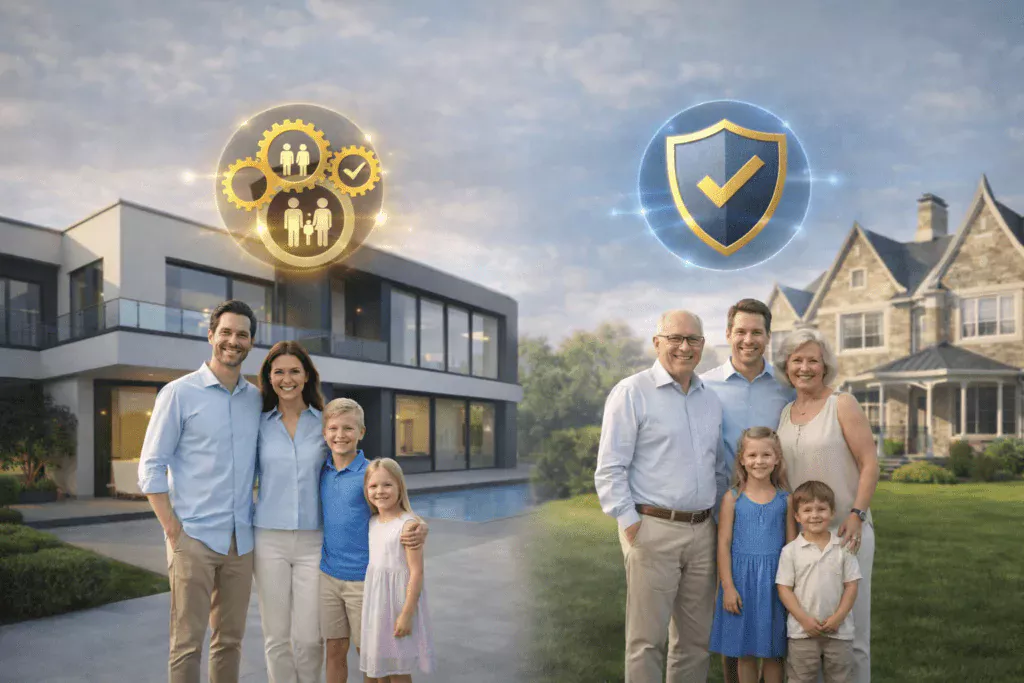
The hidden complexity behind the numbers: how the essence of each family redefines wealth architecture for high-net-worth families.
In the global wealth management landscape, personalization has evolved from a differentiator to an essential element in any robust strategy aimed at high-net-worth investors. The complexity lies not just in the volume of assets, but in the unique set of aspirations, values, and challenges each family carries.
Imagine four families, each with an identical and substantial net worth. Despite their financial equivalence, their approaches must be entirely distinct. Factors such as family dynamics, generational objectives, risk profiles, and global geographic presence are crucial in defining the ideal wealth architecture. In a world where the high-net-worth population continues to grow, the demand for tailored solutions becomes increasingly relevant.
To illustrate this diversity, let's consider four family archetypes, all with the same level of wealth, but with distinct needs and worldviews, which demand fundamentally different management strategies:
The Global Entrepreneurial Family – Dynamic**
**
With wealth built from technological innovations and international expansion, this family seeks liquidity and agility. Its members are involved in new ventures and require venture capital, as well as structures that facilitate global diversification and access to emerging markets. Their primary concern is optimizing investments for accelerated growth while protecting against geopolitical volatilities. There is a strong inclination towards direct investments and co-investments in promising startups. International tax efficiency is essential, given the cross-border nature of their businesses and residences.
The Traditional Family – Preservers**
**
With roots in sectors such as agribusiness or industry, this family prioritizes capital preservation across generations and well-structured succession. The focus is on stability, risk mitigation, and the efficient transfer of wealth and values. Structures like holdings, trusts, and consistent succession planning are fundamental. Family governance is a central pillar, with clear decision-making councils and protocols, aiming to ensure the perpetuity of wealth and harmony among members.
The Philanthropic Family**
**
For this group, wealth is an instrument for social and environmental transformation. Beyond financial returns, they seek investments aligned with ESG principles (environmental, social, and governance) and relevant philanthropic initiatives. Wealth management involves establishing foundations, strategic donations, and impact investments that reflect their values. The challenge lies in balancing financial sustainability with impact maximization, requiring metrics that integrate financial and social returns.
The New Wealth Family**
**
Originating from a recent liquidity event, such as a company sale or an IPO, this family faces the challenge of structuring and managing a newly acquired fortune. The initial priority is the protection and consolidation of wealth, followed by the exploration of new investment opportunities and the financial education of future generations. The profile tends to be more conservative initially, gradually evolving towards greater sophistication and involvement in management. The demand for strategic consulting and education is high, with a focus on building a solid long-term plan.
Global wealth management trends for 2025 and 2026 emphasize that high-net-worth individuals seek more than just returns. They want control, purpose, and alignment with their values, as the report highlights The UHNWI of 2025 by Andsimple. Technology, once seen as a cost, now enables personalization at scale, making it more accessible and transparent.
Wealth management thus becomes a direct reflection of each family's aspirations, ensuring not only growth but also longevity and positive impact. This is the future of wealth planning, which must be strategic, integrated, and deeply human.
Does your current structure reflect who your family is today or who it was in the past?

.jpg)